
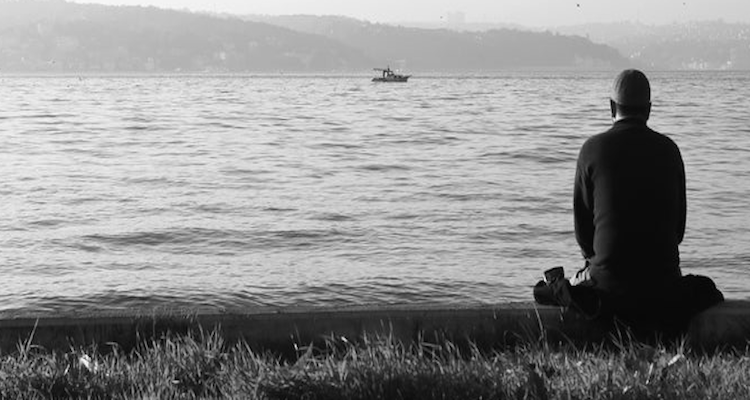
Many of us were raised with the belief that happiness is something to be found, a thing to chase, earn, or some sort of destination to finally arrive at.
Once that idea took root, the race began.
We ran toward careers, relationships, purchases, philosophies, and spiritual practices, listening to anyone or anything that promised to help us build that happy place.
And sometimes it worked, at least temporarily.
Sure, most of us can point to moments when happiness seemed to fall into our hands: a new adventure, a meaningful relationship, or a long-anticipated achievement. But just as quickly as it appeared, it then began to fade, and before long, we found ourselves chasing it once again.
The cycle repeats, and over time, this pursuit becomes less exciting and more exhausting. The carrot stays just out of reach, and the thought of starting again can feel overwhelming.
So how do we finally secure this elusive thing we call happiness and free ourselves from that endless frustration of carrot and stick? When does this vicious cycle end?
What if the problem isn’t so much that happiness keeps slipping away, but that the way we’re looking for it is what keeps pushing it out of reach?
We are often so eager to fix the troubles in our lives, and typically rush straight into solutions without taking the time to truly understand the problem. Like sitting in a sinking boat taking on water, frantically looking for bigger buckets without ever stopping to look for the leak.
Before trying to solve our happiness dilemma, do we actually understand what happiness is?
French philosopher and Nobel prize-winning novelist Albert Camus once wrote:
“In the midst of hate, I found there was, within me, an invincible love.
In the midst of tears, I found there was, within me, an invincible smile.
In the midst of chaos, I found there was, within me, an invincible calm.
I realized, through it all, that…
In the midst of winter, I found there was, within me, an invincible summer.”
For me, Camus’ words quietly point to a radical notion, that the thing we’re searching for isn’t something to acquire, it’s a constant. It’s always there.
In other words, happiness doesn’t come and go; we do.
Just like the sun doesn’t vanish when clouds roll in. It’s still there, shining just as strongly as ever, but the clouds create the illusion that it’s gone.
When I look back on my own life, even during the chaos of recent years, I can see that moments of happiness were always present, scattered between all of the struggles.
At the time, I attached those moments to external things like:
This person makes me happy.
I’m happiest when I’m on my motorcycle.
I feel good when I take a walk in nature.
But when I look more closely, none of those things actually created happiness. They simply helped quiet my mind long enough for me to be fully present, and in that presence, something fundamental revealed itself.
The happiness was already there, and that’s the constant Camus was pointing to.
Those moments worked not because of where I was or who I was with, but because, for a brief moment, I was simply here, now, and unencumbered by thought.
Happiness, then, is not something we earn or achieve. It is our natural state of being.
When this becomes clear, the exhausting search finally subsides, and a new skill becomes essential going forward: awareness.
As we begin to notice how and why we leave this natural state, we then also learn how to return to it, without anything needing to change and without something new needing to happen.
With that awareness and understanding, the struggle softens, the frustration loosens its grip, and ironically, the things we once thought needed to change begin to change.
Maybe happiness was never what we were searching for; maybe it was peace.
